Zero Waste Football: Niner Nation making your game days cleaner!
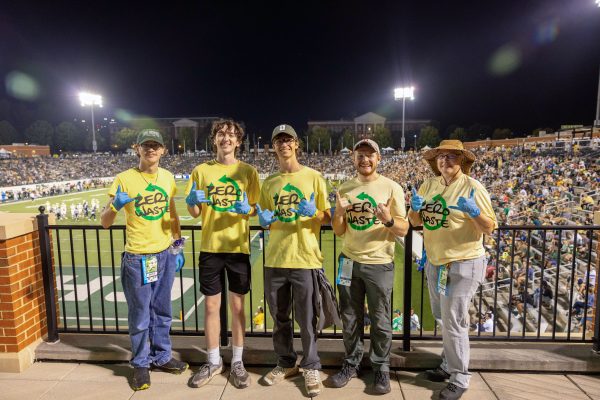
Football season is a time for Niner Nation to come out and show off school pride, but here at UNC Charlotte, it is also a chance to make a difference by protecting the environment and contributing to sustainability efforts.
As fans fill up the Jerry Richardson Stadium, it is important to recognize the students, staff, and volunteers who are working hard behind the scenes to ensure a healthy environment for everyone, keeping as much game day waste out of our landfills. Recycling and composting are built into the game day experience starting from kickoff all the way into the final cleanup.
What does zero waste mean?
Zero Waste is a way to focus on reducing the amount of waste sent to landfills. Instead of throwing away materials, zero waste efforts look for any opportunities to reuse, reduce and recycle. Waste prevention, also referred to as source reduction, focuses on stopping waste before it is created. Efforts such as using fewer materials, designing longer-lasting products, and reducing consumption contribute to this goal.
At UNC Charlotte, the zero waste program focuses on diverting as much waste as possible from the landfills and sending materials to the appropriate recycling, composting, or waste facilities.
Zero waste history at unc charlotte
Charlotte’s zero waste program at Jerry Richardson Stadium has been around since the very beginning.
Construction began for the Jerry Richardson Stadium in April 2011. The same day as the groundbreaking, the Student Government Association passed a resolution to make the new football stadium a zero waste facility. When the stadium opened in 2013, zero waste operations were in effect for the first game.
Since then, the program has continued to grow. In 2022, the Office of Sustainability updated the initiative with new waste bins, additional student workers and a stronger focus on student involvement. Some of these efforts have been funded by the Charlotte Green Initiative, which is the university’s student-supported green fund.
The program has also created opportunities for students to become directly involved in the process. Student workers help monitor waste stations during games, while volunteers participate in sorting events after games.
What happens on game day?
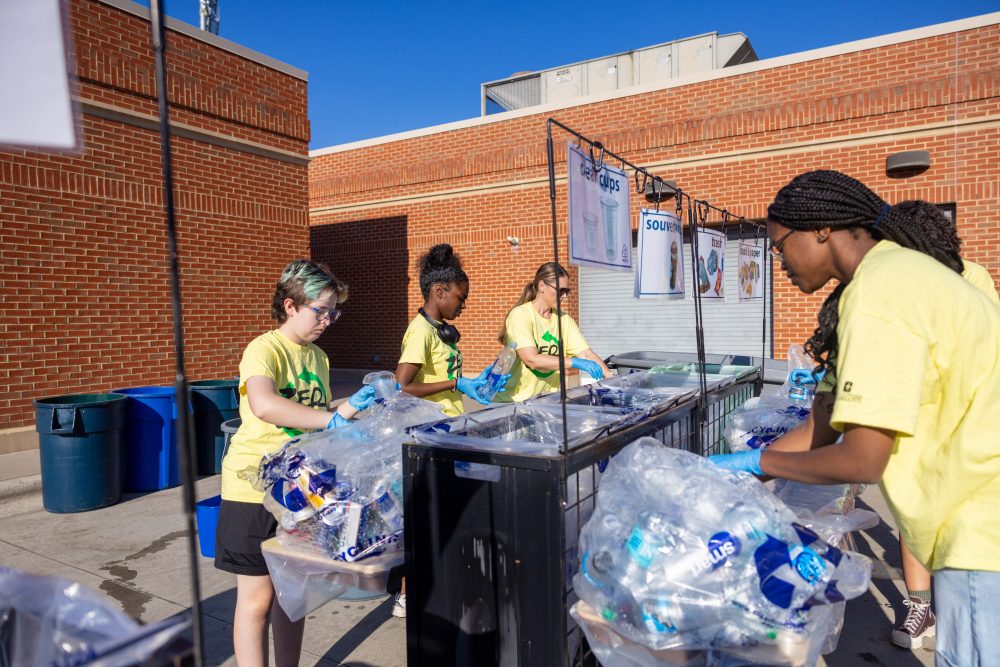
Zero waste efforts begin early before anyone arrives at the game, setting up recycling and compost bins throughout the entire stadium. During the game, you might see some Zero Waste Stewards monitoring bins, helping keep materials sorted and answering questions from fans about where their waste belongs.
One of the easiest ways you can help out is to know how to properly dispose of your items, so don’t ever be afraid to ask!
The sorting does not end when the final whistle blows and the fans leave the stadium. The zero waste team continues collecting materials, preparing for the following sorting day. Students, staff and volunteers all come together for a hands-on sorting event.
During these events, volunteers open bags collected from the stadium and separate materials into different waste streams, including recycling, trash and compost. Materials such as cans, bottles, cardboard, plastics and food scraps are separated so that they can be sent to the correct facilities.
The results speak for themselves!
Charlotte executes zero waste better than most college stadiums, and the numbers show. During the 2025 football season, an average of 83% of game day waste was diverted from landfills through recycling and composting. Individual games reached rates as high as 87%.
The program has also made a long-term impact throughout the years. Since 2013, when the zero waste stadium initiative began, UNC Charlotte has diverted more than 128 tons of recycling and compost from landfills. The university maintained consistent diversion rates and kept them above 80% in 2023, 2024, and 2025.
How can Niners get involved?
These results are only possible with people willing to get their hands dirty! Whether it’s recycling after the game or being hands-on at the sorting events.
Students, staff, and faculty have the opportunity to get involved directly with the zero waste football program by participating at post-game sorting events throughout the 2026 season.
Students, staff, or faculty interested in getting involved can register for one (or multiple) of the upcoming volunteer dates:
- September 27 – Sign up to volunteer
- October 4 – Sign up to volunteer
- October 31 – Sign up to volunteer
- November 15 – Sign up to volunteer
- November 29 – Sign up to volunteer
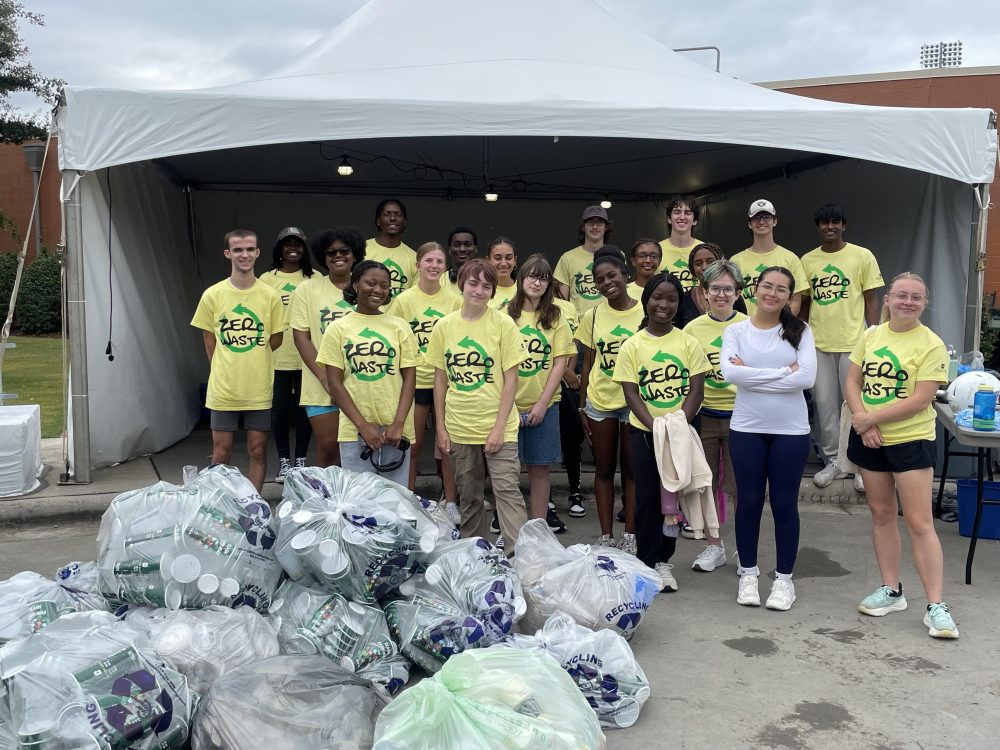
If you don’t want to get your hands dirty, there are other ways to help! Fans can contribute during the game itself by putting their waste in the correct bin to make sorting days run smoothly. At Jerry Richardson Stadium, the rule is simple: “If you ate from it, compost it. If you drank from it, recycle it.” Food and paper packaging go into compost, while items such as aluminum cans, plastic bottles, and stadium cups go into recycling.